A transferred call should carry its context
A transfer is only a useful connection when the receiving team understands why the caller reached out and what should happen next.
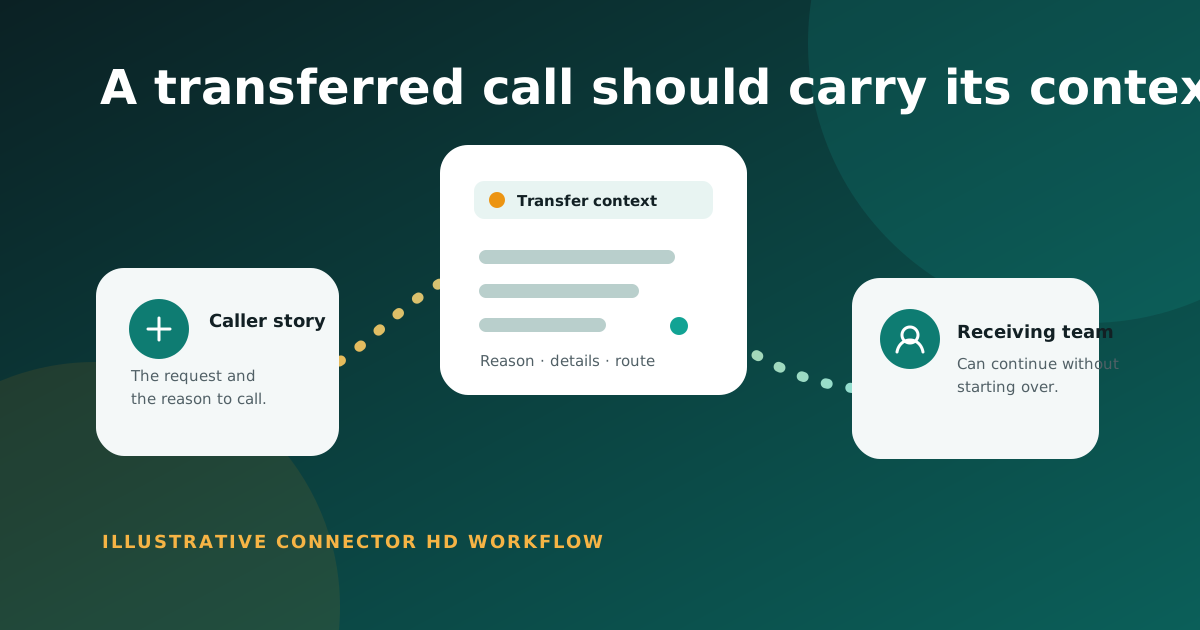
For a business with several teams or call outcomes, a transfer can be the right answer. But sending a caller to another person without the reason for the call creates a restart. The caller repeats themselves, and the receiving team has to reconstruct the request. A better route treats the transfer as one part of the same conversation.
Decide what the receiving team needs to know
The useful details vary by route, but the principle stays the same: pass along the context that helps the next person continue. That can include the caller's reason for reaching out, the relevant question or request, who they were trying to reach, and the next action the business has identified.
Write the route in terms of the caller's outcome
Names on an internal org chart are not always meaningful to a caller. A route is clearer when it is defined by the outcome: connect to the appropriate team, continue an appointment question, take a qualified next conversation, or get a human involved. That makes the handoff easier to review and explain.
- What is the caller trying to accomplish?
- Which team or person is best able to continue?
- What context should travel with the handoff?
- What is the fallback if the usual route is unavailable?
A transfer should make the next conversation easier for the caller and the receiving team.
Keep a fallback route for the moments that do not fit
Some transfers will not connect as expected. A caller may need another team, the usual recipient may be unavailable, or the question may fall outside the standard path. Document the fallback: a different route, an approved intake, or a human exception. The goal is a clear next action, not an endless chain of options.
Test the route with real caller types
Review common reasons for calling and follow the route from first answer to receiving team. If the next person has to ask for the basics again, the path is missing useful context. If the outcome is unclear, the route needs another decision.
Explore how Connector HD works, read the common questions, or map a clearer multi-team handoff.