An after-hours call path needs a daytime owner
An inbound route does not end when the standard workday does. It needs a clear decision for the caller now and a clear owner for the next action later.
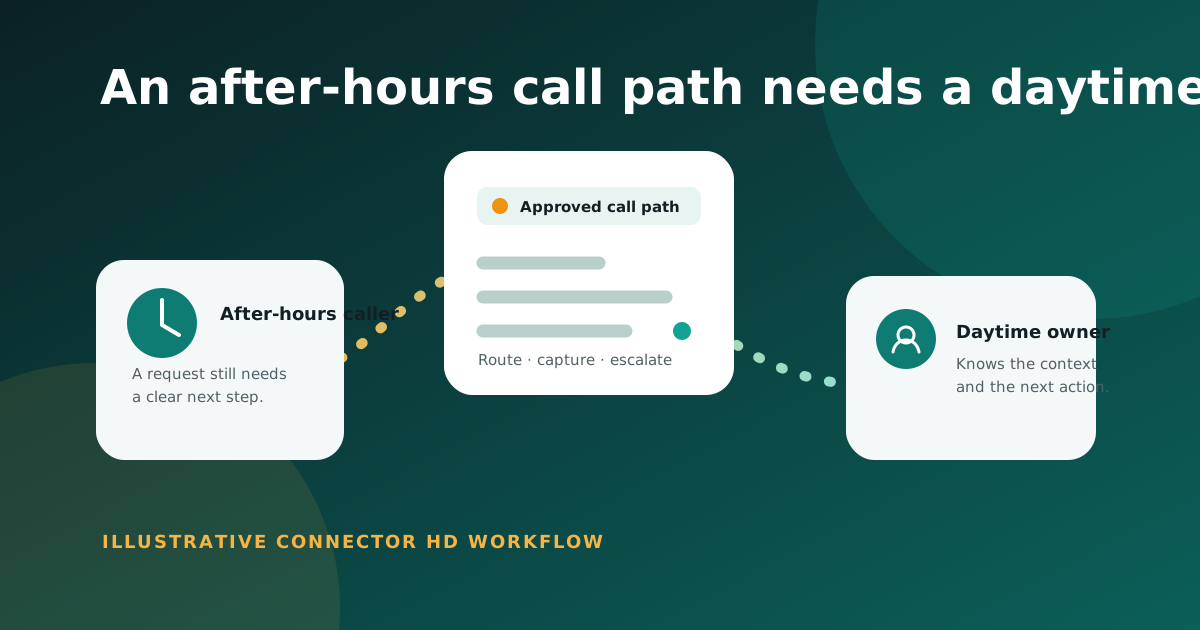
After-hours and overflow calls are easy to treat as a separate pile of messages. But each caller still has a reason for calling, and the business still needs to decide what happens next. The most useful call path makes those decisions before the call arrives.
Separate the call path from the schedule
The same caller needs may appear during the day, after hours, or when every available person is busy. Start with the allowed outcomes: a route or transfer, an appointment path, a qualified intake, a message with a defined follow-up, or a human handoff for the situations your team designates. The schedule changes; the logic of the caller's next step should remain understandable.
Name the exceptions before they become surprises
Some calls should not follow the standard route. A request may need a person, fall outside the questions that can be handled, or need a different next action. Identifying those exceptions in advance gives the inbound path an honest boundary and gives the team a shared rule for what to do next.
- Which caller needs can be routed, booked, or captured?
- Which situations call for a human handoff?
- What details should travel with the next owner?
- Who reviews the next action when the standard workday resumes?
An after-hours path is useful when the caller gets a clear next step and the team knows who owns it next.
Make the daytime owner explicit
A message without an owner is only a reminder. For each route that becomes a later follow-up, decide the team or role that receives it and the context they need to continue. That can include why the caller reached out, what was discussed, and the next step the business wants to offer. The person returning the call should not have to reconstruct the conversation from scratch.
Review the path under real conditions
Walk through the route as a caller would: a routine request, a booking question, a multi-team request, a busy-period call, and an exception. If the next decision or owner is unclear, the route needs another line of definition.
Explore how Connector HD works, read the common questions, or map an after-hours or overflow call path for your team.